
ERPDP —
Education Reform & Policy Development Program
Title: From Silence to Systems Change — How Three Schools Sparked a Movement
In 2025, Humanity Horizons didn’t just pilot a
program. We proved a model. With zero external donations, ERPDP launched in
three secondary schools across Alebtong and Arua, embedding climate literacy,
civic engagement, and entrepreneurship into the heart of learning. Sustained
entirely through commercial and corporate training revenue, this rollout
trained 200 Green Intellectuals, activated 2,500 Climate Ambassadors, and
equipped 18 educators to lead climate-smart classrooms. The results weren’t
just measurable — they were magnetic.
Let’s begin with Kevin.
Kevin was 16, quiet, and unsure of his place in the
world. His school had never taught climate change, let alone civic leadership.
But when ERPDP arrived, everything shifted. Kevin joined the Green
Intellectuals cohort, received training in climate science and facilitation,
and began leading peer sessions. Within weeks, he was mentoring younger
students. Within months, he was training his own teachers.
“I used to be quiet in class,” Kevin said. “Now I
teach the teachers. You believed in me — and I believed in myself.”
Kevin’s story is one of 200. Each Green
Intellectual trained through ERPDP became a catalyst — leading school-wide
campaigns, facilitating community dialogues, and implementing student-led
projects. These youth leaders didn’t just learn about climate change. They led
the response.
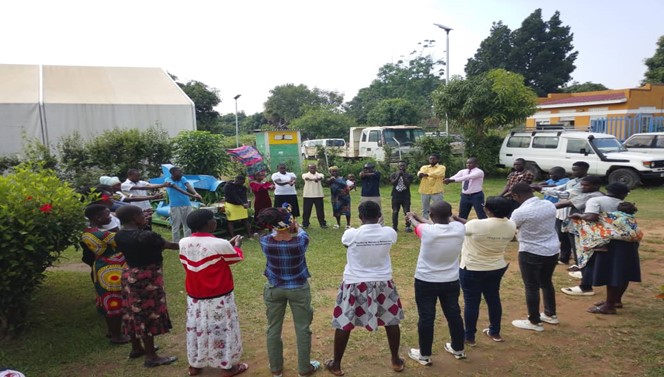
Across the three pilot schools, ERPDP activated
2,500 Climate Ambassadors — students who participated in assemblies, clubs, and
outreach activities. They organized tree planting drives, hosted debates on
climate justice, and launched recycling initiatives that reduced plastic waste
by over 60%. One group built a school garden that now feeds 80 students daily.
Another designed a solar-powered phone charging station using locally sourced
materials.
These weren’t extracurriculars. They were
curriculum-integrated, community-rooted, and youth-led — all sustained by a
program that didn’t rely on donor funding.
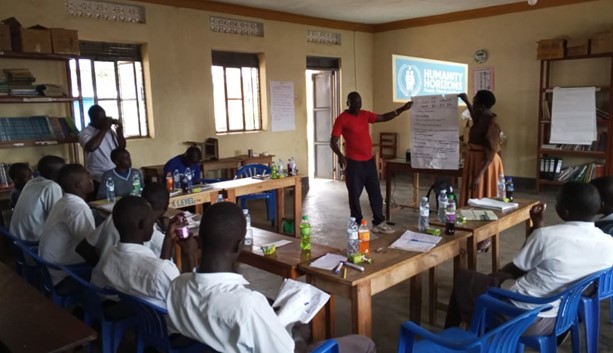
Behind the scenes, 12 teachers were trained using Humanity Horizons’ TEACH framework — a holistic model that builds technical, emotional, and pedagogical capacity. Educators learned how to embed climate literacy into science, geography, economics, and literature.
They practiced
student-centered facilitation, project-based assessment, and interdisciplinary
planning. “I’ve taught for 20 years,” said Ms. Namusoke from Arua. “This is the
first time I’ve taught for the planet.”
Six school administrators were also onboarded,
transforming institutional culture. They revised policies to support climate
clubs, allocated space for student projects, and partnered with local
organizations for mentorship and resources. Their leadership created an
enabling environment — one where youth voice was not just heard, but honored.
The curriculum itself was a breakthrough. ERPDP’s Future Climate Change and Social Entrepreneurship Course delivered three modules — Climate Science, Disaster Risk Reduction, and Value Creation — weighted to maximize impact: 30% climate adaptation, 20% entrepreneurship, 20% value creation, and 30% student-led projects. These modules connected global challenges to local solutions, equipping students to think systemically and act strategically.
The numbers tell a powerful story:
- 3 schools launched
with full ERPDP integration
- 200 Green Intellectuals trained to
lead climate literacy and civic action
- 2,500 Climate Ambassadors activated
through peer learning and campaigns
- 12 teachers trained in
climate-integrated pedagogy
- 6 school administrators onboarded to
lead reform
- 60% reduction in plastic waste in
pilot schools
- 80 students fed daily
through student-led school gardens
- 1 solar prototype built by
students using local materials
- 3 district exhibitions held, showcasing youth innovation in STEM and sustainability
And all of this — every training, every toolkit,
every campaign — was funded through commercial and corporate trainings
delivered by Humanity Horizons. No external donations. No grants. Just
strategic partnerships, earned revenue, and a belief in youth-led systems
change.
This self-sustaining model didn’t just deliver
impact. It proved readiness. ERPDP is now positioned to scale to 30 schools,
train 500 teachers, and reach 10,000 students by end of 2026. With strategic
donor support, we can accelerate this growth, deepen our curriculum, and expand
our hubs. Every shilling will go toward proven systems, youth-led innovation,
and measurable change.
Kevin’s story is just the beginning. Behind every
metric is a life transformed. Behind every school is a community engaged. And
behind every lesson is a future being reimagined.
ERPDP isn’t just a program. It’s a movement. It’s a
blueprint for climate-smart education in Africa. It’s a model that blends
pedagogy with purpose, and learning with leadership. And it’s ready — for
donors, for policymakers, and for every young person who deserves a future they
can shape.
We invite you to walk with us. To fund a classroom. To sponsor a hub. To co-lead the next chapter of ERPDP. Because when education meets climate action, the results aren’t just measurable. They’re magnetic.
Roots of
Resilience
Title: From Waiting for Rain to
Building Livelihoods — How Refugees and Farmers Became Climate Leaders Tagline:
When resilience is rooted in relevance, every harvest becomes a pathway to
dignity.
In 2025, Humanity Horizons didn’t just deliver a
program — we delivered proof. Proof that resilience can be built without
external donations. Proof that refugee and host communities can lead climate
adaptation when given the right tools. And proof that commercial and corporate
partnerships can sustain deep, measurable, and magnetic impact. Through our
flagship Roots of Resilience initiative, we reached over 500 individuals across
Baratuku Refugee Settlement in Adjumani, Imvepi in Terego, Rhino Camp in Madi Okollo,
and Arua City. These were not passive beneficiaries. They were farmers, youth,
women, and entrepreneurs who stepped into leadership, restored land, built
livelihoods, and reimagined their futures.
At the heart of this transformation is Mama
Florence, a farmer in Nebbi. For years, she waited for rain. Her soil was dry,
her yields were low, and her hope was fading. But when she joined a Roots of
Resilience training, everything changed. She learned composting, water
harvesting, and regenerative farming. She built a garden that now feeds her
grandchildren and supplies the local market. She trained 15 other women. And
she became a mentor. “I used to wait for rain,” she said. “Now I harvest hope.
We didn’t receive donations. But someone believed in us. And we believed in
ourselves.”
Mama Florence’s story is echoed across the 200
farmers trained in agroecology, composting, and water harvesting. These
trainings were designed and facilitated by Green Intellectuals and Ecolead
Ambassadors — youth leaders who translated climate science into practical,
culturally relevant strategies. Farmers learned to build compost pits, design
rainwater systems, and restore degraded soil. They didn’t just receive
knowledge. They co-created it. In Zombo, a farmer cooperative doubled its
yields within two seasons and reinvested profits into youth mentorship. In
Nebbi, farmers began producing compost commercially, supplying nearby schools
and gardens.
But Roots of Resilience didn’t stop at farms. In
refugee settlements and urban centers, we delivered market-relevant resilience
training to over 500 individuals. These sessions focused on climate-smart
agribusiness, circular economy models, and green entrepreneurship. Participants
learned how to turn organic waste into compost, how to grow drought-resistant
crops, and how to build micro-enterprises that serve both environmental and
economic needs. In Imvepi, a youth group launched a composting business that
now supplies local farmers. In Rhino Camp, a women’s cooperative began
producing organic vegetables for nearby markets. And in Arua City, refugee
youth trained through our program now lead rooftop farming initiatives on
schools and community buildings.
Three seed banks were built in Zombo and Nebbi,
each housing drought-resistant varieties and community-grown stock. These banks
became more than storage — they became symbols of sovereignty. “We used to
depend on external seed,” said Mr. Ladu, a farmer leader. “Now we grow, save,
and share our own.” Five water systems were installed using locally sourced
materials and community labor. These systems now serve over 300 households,
reducing water stress and enabling year-round cultivation. In Baratuku, farmers
reported a 60% increase in yield after implementing water harvesting techniques
learned through our training.
Youth played a central role. Through school-based
resilience clubs and community hubs, over 2,500 Climate Ambassadors were
activated. These young people led clean-up campaigns, mapped local climate
risks, and facilitated intergenerational dialogues. One group created a
composting curriculum now used in three schools. Another launched a community
radio segment on food sovereignty. In Arua City, refugee youth produced a
podcast episode that reached diaspora networks and sparked mentorship offers
from abroad. “We spoke — and they responded,” said Sharon, 16. “We didn’t just
tell stories. We built bridges.”
Behind these achievements is a bold funding story.
In 2025, Humanity Horizons received no external donations. Instead, we
sustained Roots of Resilience through commercial trainings delivered to
corporate partners in agriculture, climate adaptation, and sustainability.
These trainings generated revenue that funded farmer kits, youth facilitation,
seed bank construction, and water system design. It was a leap of faith — and
it worked.
The numbers speak volumes:
- 500+ refugees and host community members
trained in market-relevant climate resilience skills
- 200 farmers trained in
agroecology and water harvesting
- 3 seed banks built,
securing local food systems
- 5 water systems installed,
serving 300+ households
- 15 women mentored by
Mama Florence alone
- 60% increase in yield
reported by Zombo cooperative
- 4 refugee settlements reached:
Baratuku, Imvepi, Rhino Camp, Arua City
- 3 youth-led businesses launched in
composting and urban farming
- 1 rooftop garden built by
refugee youth in Arua City
- 2,500 Climate Ambassadors activated,
leading campaigns and trainings
And the impact goes beyond numbers. Farmers report increased food security, reduced migration during dry seasons, and stronger community bonds. Refugee youth say they feel seen, trusted, and equipped to lead. Local governments are now requesting program expansion. And corporate partners are returning — not just for training, but for co-leadership.
Roots of Resilience is more than a program. It’s a
philosophy. It’s built on the belief that communities already hold the wisdom
to adapt — they just need tools, trust, and space to lead. In 2025, we proved
that belief. We didn’t wait for funding. We built the future anyway.
Looking ahead, we aim to scale Roots of Resilience
to 10 districts, train 1,000 farmers, and activate 5,000 youth leaders by end
of 2026. With strategic donor support, we can accelerate this growth, deepen
our curriculum, and expand our hubs. Every shilling will go toward proven
systems, community-led innovation, and measurable change.
Mama Florence’s garden is thriving. Her mentees are
mentoring others. Youth in Imvepi are earning income from compost. Women in
Rhino Camp are feeding their families and selling to markets. And refugee youth
in Arua City are turning rooftops into farms. These are not isolated stories.
They are roots in a growing forest of resilience.
We invite you to walk with us. To fund a seed bank. To sponsor a youth-led training. To co-lead the next chapter of climate-smart agriculture in Uganda. Because when resilience is rooted in relevance, every harvest becomes a pathway to dignity.